Techniniai Dokumentai
Specifikacijos
Markė
Renesas ElectronicsProduct Type
Clock Buffer
Maximum Input Frequency
50MHz
Mount Type
Surface
Pakuotės tipas
SOIC
Kaiščių skaičius
8
Minimum Supply Voltage
3.3V
Maximum Supply Voltage
5V
Minimali darbinė temperatūra
0°C
Maksimali darbinė temperatūra
70°C
Ilgis
5mm
Aukštis
1.75mm
Standards/Approvals
No
Serija
501MLF
Automotive Standard
No
Produkto Aprašymas
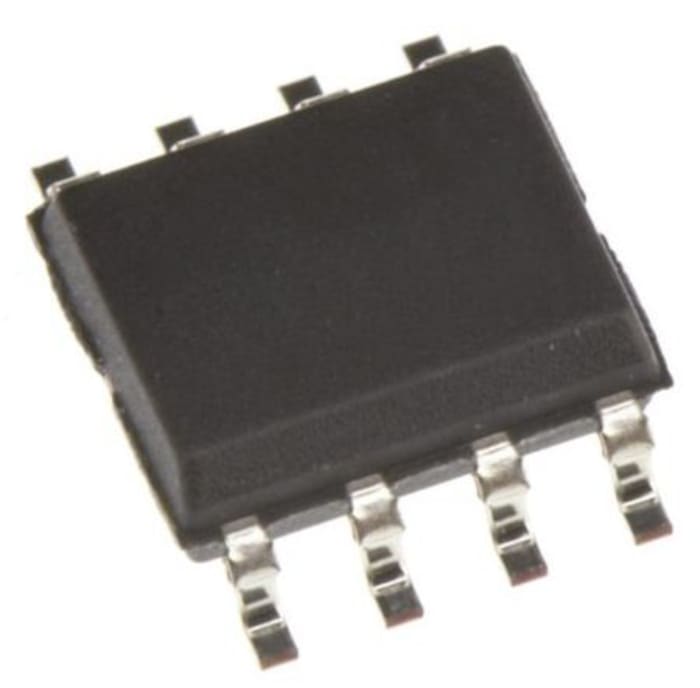
The Renesas Electronics 501 Loco™ is the most cost effective way to generate a high-quality, high-frequency clock output from a lower frequency crystal or clock input. The name LOCO stands for Low Cost Oscillator, as it is designed to replace crystal oscillators in most electronic systems. Using Phase-Locked Loop (PLL) techniques, the device uses a standard fundamental mode, inexpensive crystal to produce output clocks up to 160 MHz. Stored in the chip's ROM is the ability to generate nine different multiplication factors, allowing one chip to output many common frequencies (see table on page 2). The device also has an output enable pin which tri-states the clock output when the OE pin is taken low.

Ideate. Create. Collaborate
JOIN FOR FREE
No hidden fees!


Sandėlio informacija laikinai nepasiekiama.
€ 135,80
€ 1,40 Each (In a Tube of 97) (be PVM)
€ 164,32
€ 1,694 Each (In a Tube of 97) (su PVM)
97

€ 135,80
€ 1,40 Each (In a Tube of 97) (be PVM)
€ 164,32
€ 1,694 Each (In a Tube of 97) (su PVM)
Sandėlio informacija laikinai nepasiekiama.
97
Ideate. Create. Collaborate
JOIN FOR FREE
No hidden fees!
Techniniai Dokumentai
Specifikacijos
Markė
Renesas ElectronicsProduct Type
Clock Buffer
Maximum Input Frequency
50MHz
Mount Type
Surface
Pakuotės tipas
SOIC
Kaiščių skaičius
8
Minimum Supply Voltage
3.3V
Maximum Supply Voltage
5V
Minimali darbinė temperatūra
0°C
Maksimali darbinė temperatūra
70°C
Ilgis
5mm
Aukštis
1.75mm
Standards/Approvals
No
Serija
501MLF
Automotive Standard
No
Produkto Aprašymas
The Renesas Electronics 501 Loco™ is the most cost effective way to generate a high-quality, high-frequency clock output from a lower frequency crystal or clock input. The name LOCO stands for Low Cost Oscillator, as it is designed to replace crystal oscillators in most electronic systems. Using Phase-Locked Loop (PLL) techniques, the device uses a standard fundamental mode, inexpensive crystal to produce output clocks up to 160 MHz. Stored in the chip's ROM is the ability to generate nine different multiplication factors, allowing one chip to output many common frequencies (see table on page 2). The device also has an output enable pin which tri-states the clock output when the OE pin is taken low.
Ideate. Create. Collaborate
JOIN FOR FREE
No hidden fees!